Month: August 2012
Myth #2–I have to Know a Lot About YA Literature
I don’t expect every high school teacher to be a card carrying member of the American Library Association, dedicated to each new issue of School Library Journal. When I first introduced independent reading or Sustained Silent Reading (SSR) into my classroom routine, I had a grand total of 15 books sitting on the shelf, five of which were in the Harry Potter series.
It doesn’t matter where you start as long as you start somewhere. I don’t care if it’s The Hunger Games or even Twilight. If your students start to see you as a reader, then they will begin to see that reading has value.
You may not know much about YA when you begin, but by the end of the first month you will have more book recommendations from students, blogs, and your librarian then you know where to make your reading piles. Until then, here are a few sites to feed your new-found literary habit:
1) Goodreads.com–a social site that allows users to build shelves (to-be read, reading, read) and organize their reading lists, browe new titles, connect with readers and authors, and rate and review their books.
2) Teachmentortexts.com–a blog by two teachers who are devoted to sharing books they read that promote all areas of literacy. The books are reviewed and can be filtered by literacy strand that the bloggers see an opportunity for classroom use as a mentor text. Using current, exciting young adult literature to teach literacy! How novel!
3) YouTube–A simple search for “young adult book trailers” will produce gobs and gobs of professional and fan-made book trailers. Bre sure to preview trailers before showing them to kids as the quality and content may not always be suitable for classroom use.
4) Barnes and Noble/ Amazon–both bookseller’s sites have a section for young adult literature, recommendations, reviews, and lists. Warning: do not auto-fill your credit card info before browsing as purchasing all the wonderful titles you find becomes very addicting and “just one more book” becomes two boxes full of hardbacks delivered by your local FedEx truck!
5) Young Adult Library Services Association (YALSA)–www.ala.org/yalsa A division of ALA devoted to young adult teachers, librarians, and readers, this organization provides several useful top ten lists compiled by teens themselves.
6) Figment.com–Here we have another social media site where users can be readers and writers. There are forums for writers to publish their own work on the site and to browse other user’s writings. On the reading side, Figment posts latest book news, trailers, author interviews, and reviews.
A thriving reading community is dependent upon authentic reading role-models. As the facilitator of the community, the time that you invest in reading in front of your kids and talking about what you are raeding, the more gains you will see in their level of interest.
I may never be the kind of reader I imagine in my head; I read much more slowly than some might imagine. Unlike my colleagues, I can’t race through a 400-page novel in one Sunday afternoon. I don’t know if I’ll ever read ALL of the Newbery books or complete a hundred book challenge. But, I do know that if I never try, then not only will I never be that reader, but neither will my students.
How did you make that reading leap? What book re-invented you as a reader?
Happy reading!
Audrey
Independent Reading Myth #1–Today’s Teens Don’t Read
On the contrary, according to the NEA’s 2008 report, Reading on the Rise, young adults represent the fastest growing subpopulation that have significantly increased their reading habits. Literary reading as a whole has reversed its downward spiral over the past two decades, increasing by 7% between 2002-2008. Young adults, who on the last survey showed the steepest decline in 2002 have grown by 9 points, rising fastest out of the whole survey population. In 2008, 51% of young adults reported that they read novels, short stories, poems, and plays either in print or online.
The reality is that today’s teens are reading and reading in droves! Thanks to the popularity of recent blockbuster adaptations of YA series, these exciting and relevant stories are coming into mainstream. In fact, there is even a movement to include a book award in Fox’s Teen Choice Awards. YA author Jennifer Donnelly has been an advocate of this movement from the beginning. I can see it now–Veronica Roth’s Divergent up there next to Lil Wayne and Lady Gaga.
Teens are flocking to stories with strong heroines and nerdy book smart boys. They are stalking authors like John Greene and Stephanie Meyer with more gusto than any film or radio star.
How do I know this? Because I talk to them about it. I ask them what they’ve read or who their favorite author is. I ask them about how they choose books and who among their friends shares the same taste in books as they do. I ask them what makes a book great and then dangle carrots of curiousity in front of their noses, hoping to lead to discover yet another awesome YA novel.
Then why can’t we seem them doing it? Many of them are reading covertly. Sadly, in their daily lives reading may not be valued. Perhaps none of their teachers talk to them about reading for pleasure or even give them time to read something of their choice in class. Devastating, I know. Or for some, they are reading in plain view, right under your nose. E-readers, apps, and digital media have connected a whole generation of “digital natives” to a new look at literary life. They look like they are scrolling through Facebook? Nope, they’re flipping as fast as they can through The Summer I Turned Pretty. Texting a friend? Nope, they are updating their goodreads shelves and writing reviews of their favorites.
Perhaps it’s not teens whose behaviors and perceptions need a major shift. Perhaps it’s how we perceive readers themselves and what they read that could use a little adjustment instead.
Like to think about this a little more? Check out some of these resources:
“The Young Adult Voice in Research About Young Adults” (YALSA)
“The Kids Books are Alright” (NY Times)
“American Reading Habits Studied”
Please share any resources you may have to contribute to this conversation!
Happy reading 🙂
Audrey
Book Review: A Monster Calls
I’ve become a magnet. A magnet to stories, blogs, novels, anything regarding parents and children, especially mothers and their sons. It feels like there’s been an explosion on Facebook of blogs reposted by friends of families who have experienced the loss of a child or a parent. Their stories lead me to my knees, humbled in the face of my fear.
My fear is two-fold:
1) That I will lose my son.
2) That my son will lose me.
The truth of the matter is- unless a freak and tragic accident takes us both at the same time (God forbid)- one of us will lose the other in our lifetime. And this is the thought that wakes me up at night and that draws me to stories of loss.
Today, a friend reposted a blog of a mother whose toddler son died from a heart arhythmia during his regular nap.
A couple of months ago, a friend reposted a blog of a husband and father of two young boys, whose wife died very suddenly last fall.
I read their stories and beg…whoever is out there to beg…that it not be me and my son.
Recently, I read Patrick Ness’s A Monster Calls. This superb, lovely, painful little book has haunted me ever since. As the main character’s mother is dying from cancer, he struggles to satiate the monster who calls on him every night at the same time. At a certain point in the book, the boy steps into the monster and becomes him, wreaking havoc and destruction on his enemies. And yet, this is not the monster that he fears the most. What he fears the most is fear itself. Fear that what he truly wants is for his mother to die to end her pain. Fear that his mother will die. Fear that, when the time comes, he cannot let her go.
At night, when the shadows reach across the bed from the tree outside my window, I can feel the yew’s prickly branches and its spicy, woody scent fills my nose.
I know one day that my fear will be realized. Until then, I’ll keep reading. I read to find solace in the inexplicable connection grief can weave between strangers. I read to unearth glints of understanding and patterns to try to ratioanlize why a mother would ever have to lose a child or a child ever to have to live without its mother. But I know that just as this Winter will turn to Spring, there is life on the otherside. It’s a life I never want to understand.
But until then, I’ll read.
My fear does bring me joy. It’s started to become my companion during the day, especially when a toddler tantrum raises feelings of frustration. My fear whispers, “someday, these moments will be memories. Someday your arms will ache to wrap themselves around him and he will not be there. Someday he will long to hear you say his name and whisper, “I love you,” but you will not be there.” And so, in those moments and every moment in between I will say his name and whisper as I wrap my arms around him, “I love you. I love you. I love you.”
Urban YA Top Ten
In preparation for compiling a top ten list, I asked a good friend of mine if I could raid her English department library to brush up on my urban YA lit. As we poured over titles in a colleague’s classroom library, she asked, “How are you defining ‘urban YA?'”
I paused. “Well, YA titles with urban settings I guess?” (Dur).
I started to rattle off a number of what I felt to be obvious criteria: issues that deal with street violence, gangs, drugs, racial conflict, teen pregnancy, homeless teens, obscene language….and I stopped myself. Here I was, attempting to define a literary genre with every cliché that so many of my students are slapped with every day. I wouldn’t limit my understanding of my own students with these labels; how incredibly unfair of me to do it to the books they love!
Lastly, I most appreciate these books for the sense of personal and reading identity they inspire in their reader. For many, these books are their first experiences with the sheer joy of reading. In these books, students recognize themselves, perhaps for the first time in their reading lives.
Top Ten Urban YA List (in alphabetical order):

Bronx Masquerade
by Nikki Grimes“When Wesley Boone writes a poem for his high school English class and reads it aloud, poetry-slam-style, he kicks off a revolution. Soon his classmates are clamoring to have weekly poetry sessions. One by one, eighteen students take on the risky challenge of self-revelation…” (goodreads.com).

The First Part Last by Angela Johnson
“Bobby’s a classic urban teenager. He’s restless. He’s impulsive. But the thing that makes him different is this: He’s going to be a father. His girlfriend, Nia, is pregnant, and their lives are about to change forever…” (goodreads.com)

Homeboyz
by Alan Sitomer
“When Teddy Anderson’s little sister Tina is gunned down randomly in a drive-by shooting, the gangstas who rule the streets in the Anderson family’s rapidly deteriorating neighborhood dismiss the incident as just another case of RP, RT-wrong place, wrong time. According to gangsta logic, Tina doesn’t even count as a statistic …” (goodreads.com).

Monster by Walter Dean Meyers

The Outsiders by S.E. Hinton

Perfect Chemistry
by Simone Elkeles“When Brittany Ellis walks into chemistry class on the first day of senior year, she has no clue that her carefully created “perfect” life is about to unravel before her eyes. She’s forced to be lab partners with Alex Fuentes, a gang member from the other side of town, and he is about to threaten everything she’s worked so hard for—her flawless reputation, her relationship with her boyfriend, and the secret that her home life is anything but perfect…” (goodreads.com).
Yes, it’s true; this is a re-told Romeo and Juliet…sort of. Perfect Chemistry is a prime example of the urban novel that crosses over from a landscape of privilege to challenge (Thomas, 2011). Even though the story and characters might border on cliché, the universal appeal and high-drama keep this book from collecting any dust on the shelf. I always find it interesting to watch the conversations between unlikely students that this novel sparks. Girls and boys alike of all backgrounds line up to read it and its subsequent sequels. They dub themselves the “Alex and Brittany Fan Club.””

The Rose that Grew From Concrete by Tupac Shakur

Tyrell by Coe Booth
…”Tyrell is a young, African American teen who can’t get a break. He’s living (for now) with his spaced-out mother and little brother in a homeless shelter. His father’s in jail. …. Tyrell feels he needs to score some money to make things better. Will he end up following in his father’s footsteps?” (goodreads.com).

When a new teacher, whose face is blotched with a startling white patch, starts at their school, Maleeka can see there is bound to be trouble for her too. But the new teacher’s attitude surprises Maleeka. Miss Saunders loves the skin she’s in. Can Maleeka learn to do the same?” (goodreads.com).

Upstate by Kalisha Buckhanan
“Baby, the first thing I need to know from you is do you believe I killed my father?”
“So begins Upstate, a powerful story told through letters between seventeen-year-old Antonio and his sixteen-year-old girlfriend, Natasha, set in the 1990’s in New York. Antonio and Natasha’s world is turned upside down, and their young love is put to the test, when Antonio finds himself in jail, accused of a shocking crime…” (goodreads.com).
Finally, I’d like to end with a poem that represents the Urban YA genre to me and its place in my classroom library:
from a crack in the concrete?
Proving nature’s law is wrong it
learned to walk without having feet.
Funny it seems, but by keeping its dreams,
it learned to breathe fresh air.
Long live the rose that grew from concrete
when no one else ever cared.
Myths Surrounding Independent Reading in High School
Often, when I’m out visiting with teachers and consulting, I make the positive presupposition (Thank you Kathryn Kee! ) that teachers are having their students read a text of their choice everyday. I might make such comments as, “This would be an easy strategy to integrate into students’ independent response time during their free reading time in class.” Or, “When you book-talk to your students, you might frame it in terms of genre…”
Sometimes I receive polite head-nods and sometimes I receive eye-rolling. Independent reading time in a high school English classroom? (And unicorns poop rainbows.)
Every now and then, I’m greatful for the honest and inquisitive participant who timidly raises her hand to ask, “What exactly do you mean by ‘independent reading’?” She is usually within her first 5 years of teaching, graduated from a stellar English literature/ composition program, and is the dark horse of the English department who spends her time reading things like English Journal or following Jim Burke on Twitter.
When these gems come my way, I leap at the opportunity to unravel some perpetuative myths that exist in high school English departments and their most faithful faculty regarding independent reading. These conversations allow me to dig down to my most fervent beliefs about reading communities and often do challenge some of those beliefs. But, by the end of our conversation, whereas we may not still agree with one another, both the participant and myself have expanded our views just a little bit broader.
And so, here they are! The top 5 most common myths surrounding independent reading in high school:
Myth #1–Today’s teenagers don’t read.
Myth #2–I have to know a lot about YA literature.
Myth #3–Students won’t read in class if I give them time.
Myth #4–It’ll mean more time spent on grading poster and book reports or messing with those leveled reading programs.
Myth #5–I don’t have the time. We have all this literature we have to “cover.”
Boiling down all of the– honestly– valid obstacles to independent reading I have encountered myself and heard from colleagues to these five things is probably oversimplifying the issue. If I’ve learned anything about problem solving as an educator, it’s that I need to start with what seems simple first. Then, as I work my way through one problem at a time, the larger obstacle doesn’t feel quite so overwhelming.
As a novice teacher, the five statements above floated above my head as I began to dig more into the possibility I knew was there for amazing reading experiences for myself and my students. Please understand, I am not trying to be-little anyone’s experience or perspective. The following “myths” I’ll offer as a series of posts echo my deepest, darkest, and most powerful experiences along my own journey.
More importanlty than de-bunking these “myths,” I hope to provide a snippet of success here and there and resources that I rely on to create a transformative, empowering reading community.
Happy reading!
Myth #4
Myth #5
Book Review: Insurgent
Book Review: Code Name Verity
By Elizabeth Wein.
2012, 337p. Hyperion, $16.99 (978-1-4231-5219-4).
Gr. 9-12
Highly Recommended
Under pain of torture and threat of brutal execution, Verity, a Scottish-British spy, artfully confesses to her Gestapo captors her involvement in the Resistance. Her confession is penned on scraps of paper—everything from prescription pads to sheet music–belonging to former inhabitants of a country hotel in fictional Ormaie, France. Through a physically, mentally, and emotionally excruciating written confession, we meet her best friend and civilian air corps pilot, Maddie, who flew her on her last mission. Although the novel begins in medias res, Verity, in a defiant, sarcastic, and, at times, beaten tone begins with her best friend’s story up until the point she jumps from Maddie’s wounded plane in occupied France. It is here that Maddie continues the narrative through her pilot’s notes in her simple, honest voice. Maddie and Verity’s friendship is not one based on boys, clothes, or summer camp; instead, Wein crafts a narrative told in two voices that paints a portrait of genuine friendship in wartime. A cast of secondary characters on both sides of the war provides depth and contrast to the two friends’ lives. As historical fiction, some may be bothered by the inventive history and anachronisms, but the author seeks to justify her creative and research processes in the endnotes. The narrators’ voices are in all essence la verite, truthful. In the beginning a reader might feel bogged-down by the Scottish brag of Verity’s voice and minute details; however, once immersed in the relationship between the two young women, they will want to prolong the finale and their farewell to these friends. –Audrey Wilson-Youngblood
Prezi and QR: The Next Wave of Information Delivery
Tech Tuesday #1
Welcome to the first edition of Tech Tuesday! Each Tuesday I will post a blog that highlights technology tools for instructional use. This week, I thought we’d take some time to explore two tools that I shared with the staff at Fossil Ridge High School as part of library orientation: Prezi and QR Codes.
Both of these tools have the potential to engage an audience by disseminating information through Web 2.0 tools and smart apps. Both are free (whoop!) and both are rather intuitive for the presenter and the audience.
 |
| Click on the logo to go to the site |
Prezi
To get staretd, go to Prezi.com, create an account and watch a couple of their easy-to-follow video tutorials. Start small and give yourself plenty of time to become comfortable with the tool before trying it out on an audience.
Check out some of these teacher Prezis for more ideas!
Class Introductions:
Quick Response “QR” Codes
 |
I Read The Hunger Games, Now What?
 20 Books to Check Out After The Hunger Games

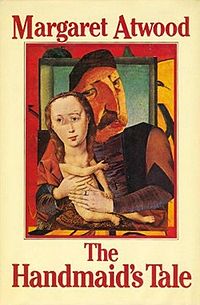
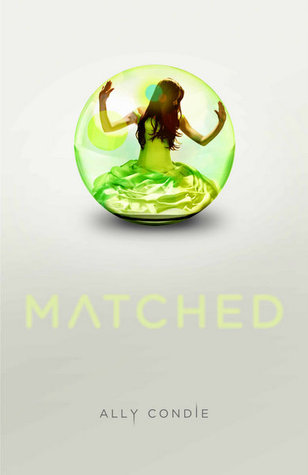
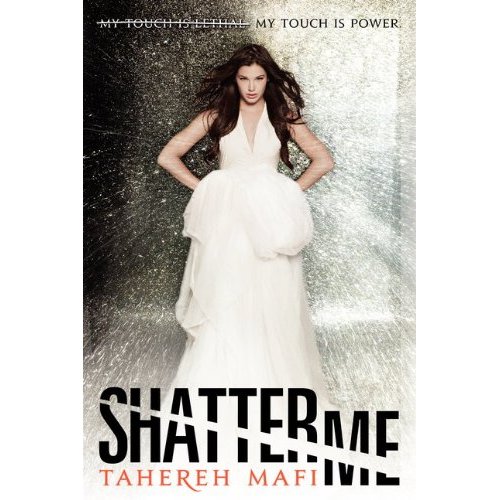
Did you speed through The Hunger Games trilogy with the speed of a tribute train? Are you sorely missing the excitement and drama of the arena? While you wait for Catching Fire, second film and book two of The Hunger Games trilogy, to be released on November 22, 2013 (15 more months!!!), check out some of these books that might help pass the time between films. Click on the title to view book trailers, authors’ pages, and reviews of each title!

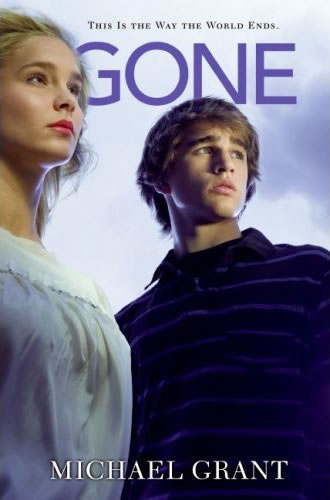
From the co-creator of the bestselling “Animorphs” comes a gripping new series in which everyone disappears in a flash on their 15th birthday. It’s a terrifying new world, and time is running out.

 Birthmarked– In the future, in a world baked dry by the harsh sun, there are those who live inside the walled Enclave and those, like sixteen-year-old Gaia Stone, who live outside. Following in her mother’s footsteps Gaia has become a midwife, delivering babies in the world outside the wall and handing a quota over to be “advanced” into the privileged society of the Enclave. Gaia has always believed this is her duty, until the night her mother and father are arrested by the very people they so loyally serve. Now Gaia is forced to question everything she has been taught, but her choice is simple: enter the world of the Enclave to rescue her parents, or die trying. A stunning adventure brought to life by a memorable heroine, this dystopian debut will have readers racing all the way to the dramatic finish.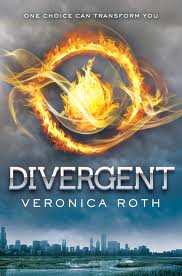


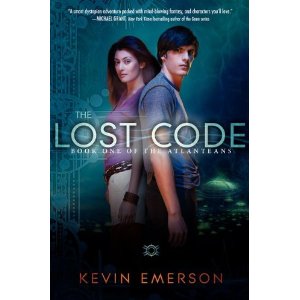
But global climate change is not something new in the Earth’s history. No one will know this better than less-than-ordinary Owen Parker, who is about to discover that he is the descendant of a highly advanced ancient race–a race that took their technology too far and almost destroyed the Earth in the process. Now it is Owen’s turn to make right in his world what went wrong thousands of years ago. If Owen can unlock the lost code in his very genes, he may rediscover the forgotten knowledge of his ancestry . . . and that “less-than-ordinary” can evolve into “extraordinary.” Kevin Emerson’s thrilling novel is Book One of the Atlanteans series–perilous adventures in a grimly plausible dystopian future, fueled by high-stakes action, budding romance, and a provoc-ative question: What would you do if you had the power to save humanity from its own self-destruction?
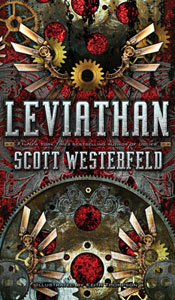
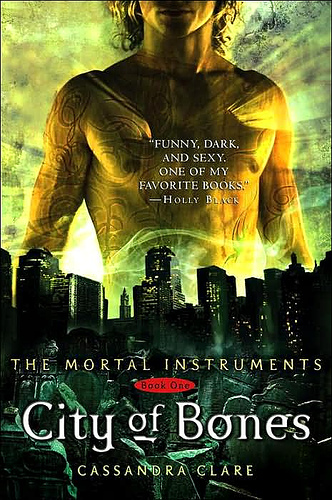
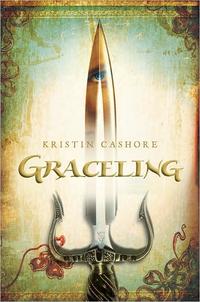
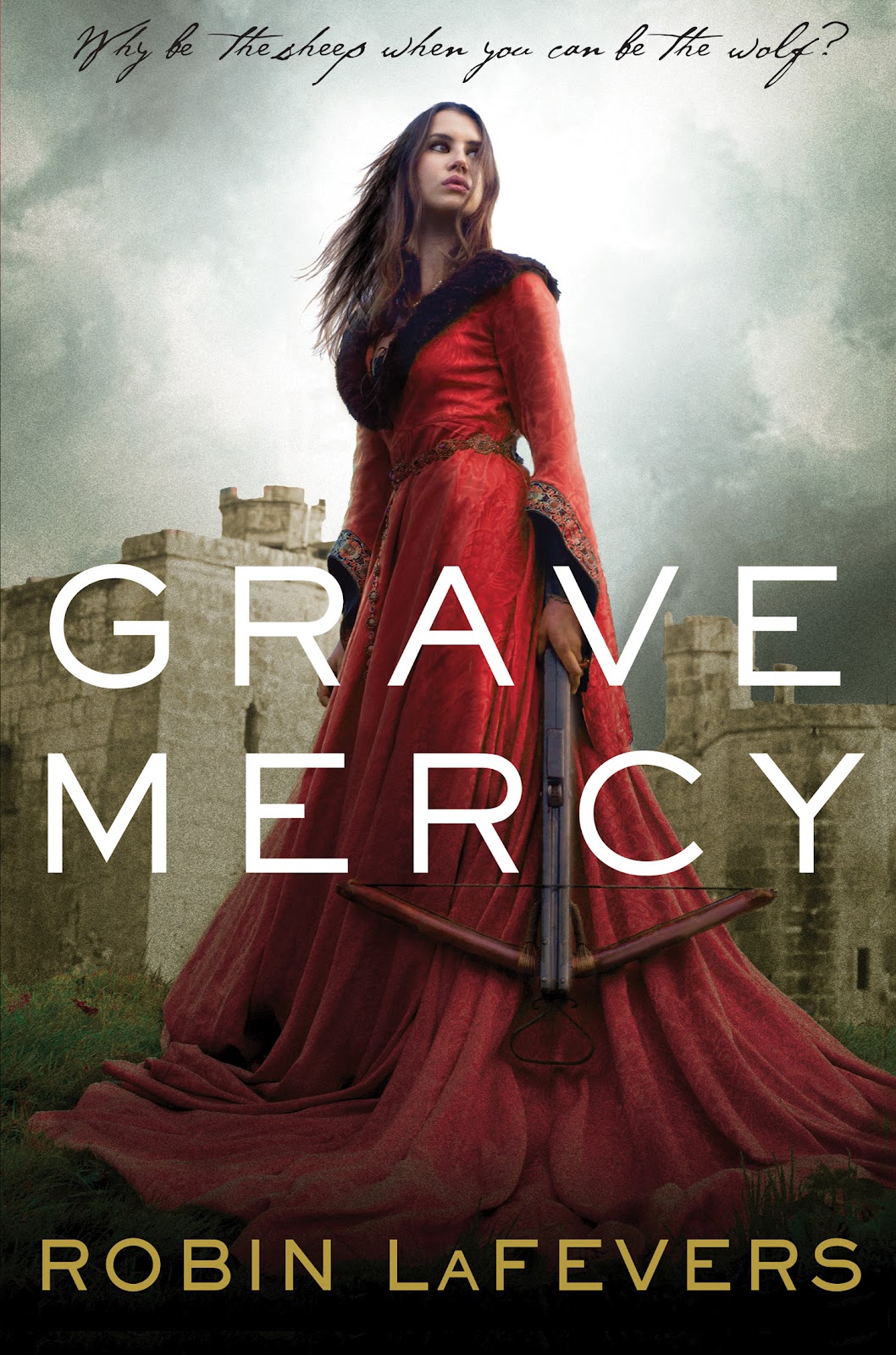
In a world where people born with an extreme skill – called a Grace – are feared and exploited, Katsa carries the burden of the skill even she despises: the Grace of killing. She lives under the command of her uncle Randa, King of the Middluns, and is expected to execute his dirty work, punishing and torturing anyone who displeases him. When she first meets Prince Po, who is Graces with combat skills, Katsa has no hint of how her life is about to change. She never expects to become Po’s friend. She never expects to learn a new truth about her own Grace – or about a terrible secret that lies hidden far away…a secret that could destroy all seven kingdoms with words alone

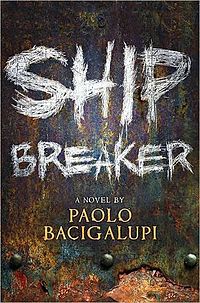 Ship Breaker– In America’s Gulf Coast region, where grounded oil tankers are being broken down for parts, Nailer, a teenage boy, works the light crew, scavenging for copper wiring just to make quota–and hopefully live to see another day. But when, by luck or chance, he discovers an exquisite clipper ship beached during a recent hurricane, Nailer faces the most important decision of his life: Strip the ship for all it’s worth or rescue its lone survivor, a beautiful and wealthy girl who could lead him to a better life… In this powerful novel, award-winning author Paolo Bacigalupi delivers a thrilling, fast-paced adventure set in a vivid and raw, uncertain future.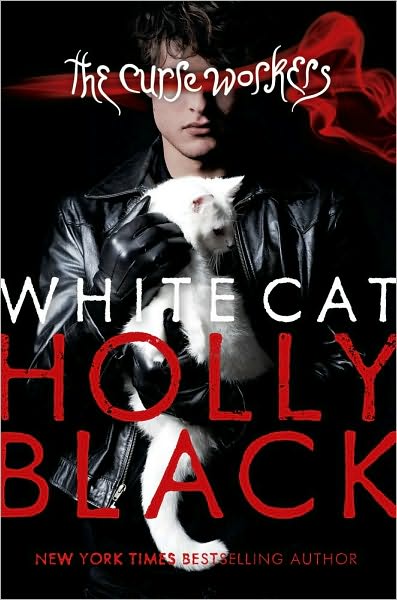
 (Re)Inventing the Librarian