Book Review: Code Name Verity
By Elizabeth Wein.
2012, 337p. Hyperion, $16.99 (978-1-4231-5219-4).
Gr. 9-12
Highly Recommended
Under pain of torture and threat of brutal execution, Verity, a Scottish-British spy, artfully confesses to her Gestapo captors her involvement in the Resistance. Her confession is penned on scraps of paper—everything from prescription pads to sheet music–belonging to former inhabitants of a country hotel in fictional Ormaie, France. Through a physically, mentally, and emotionally excruciating written confession, we meet her best friend and civilian air corps pilot, Maddie, who flew her on her last mission. Although the novel begins in medias res, Verity, in a defiant, sarcastic, and, at times, beaten tone begins with her best friend’s story up until the point she jumps from Maddie’s wounded plane in occupied France. It is here that Maddie continues the narrative through her pilot’s notes in her simple, honest voice. Maddie and Verity’s friendship is not one based on boys, clothes, or summer camp; instead, Wein crafts a narrative told in two voices that paints a portrait of genuine friendship in wartime. A cast of secondary characters on both sides of the war provides depth and contrast to the two friends’ lives. As historical fiction, some may be bothered by the inventive history and anachronisms, but the author seeks to justify her creative and research processes in the endnotes. The narrators’ voices are in all essence la verite, truthful. In the beginning a reader might feel bogged-down by the Scottish brag of Verity’s voice and minute details; however, once immersed in the relationship between the two young women, they will want to prolong the finale and their farewell to these friends. –Audrey Wilson-Youngblood
Prezi and QR: The Next Wave of Information Delivery
Tech Tuesday #1
Welcome to the first edition of Tech Tuesday! Each Tuesday I will post a blog that highlights technology tools for instructional use. This week, I thought we’d take some time to explore two tools that I shared with the staff at Fossil Ridge High School as part of library orientation: Prezi and QR Codes.
Both of these tools have the potential to engage an audience by disseminating information through Web 2.0 tools and smart apps. Both are free (whoop!) and both are rather intuitive for the presenter and the audience.
 |
| Click on the logo to go to the site |
Prezi
To get staretd, go to Prezi.com, create an account and watch a couple of their easy-to-follow video tutorials. Start small and give yourself plenty of time to become comfortable with the tool before trying it out on an audience.
Check out some of these teacher Prezis for more ideas!
Class Introductions:
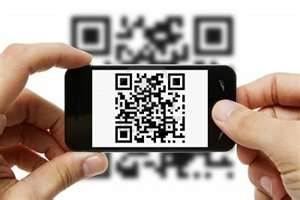
Quick Response “QR” Codes
 |
I Read The Hunger Games, Now What?
 20 Books to Check Out After The Hunger Games

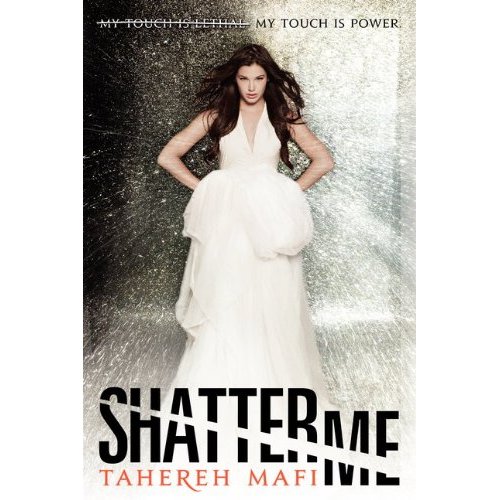
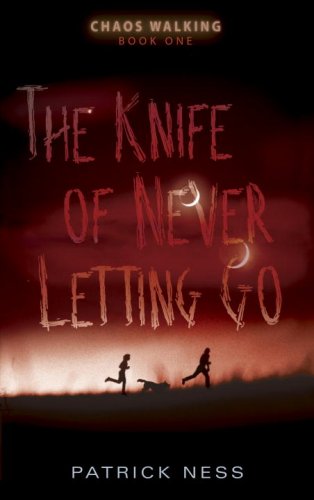
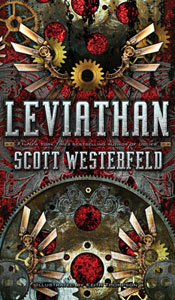
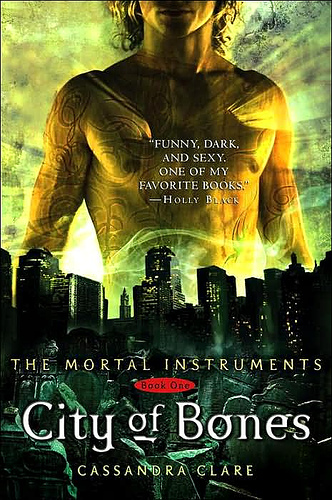
Did you speed through The Hunger Games trilogy with the speed of a tribute train? Are you sorely missing the excitement and drama of the arena? While you wait for Catching Fire, second film and book two of The Hunger Games trilogy, to be released on November 22, 2013 (15 more months!!!), check out some of these books that might help pass the time between films. Click on the title to view book trailers, authors’ pages, and reviews of each title!
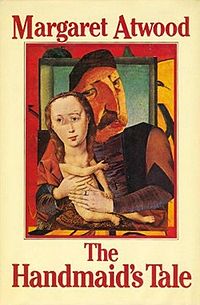

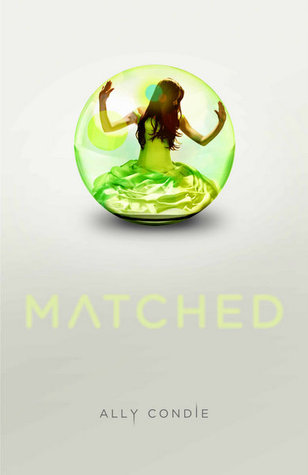
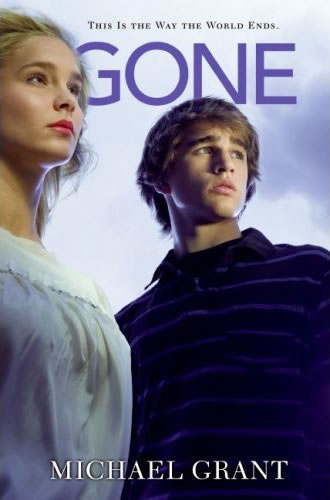
From the co-creator of the bestselling “Animorphs” comes a gripping new series in which everyone disappears in a flash on their 15th birthday. It’s a terrifying new world, and time is running out.

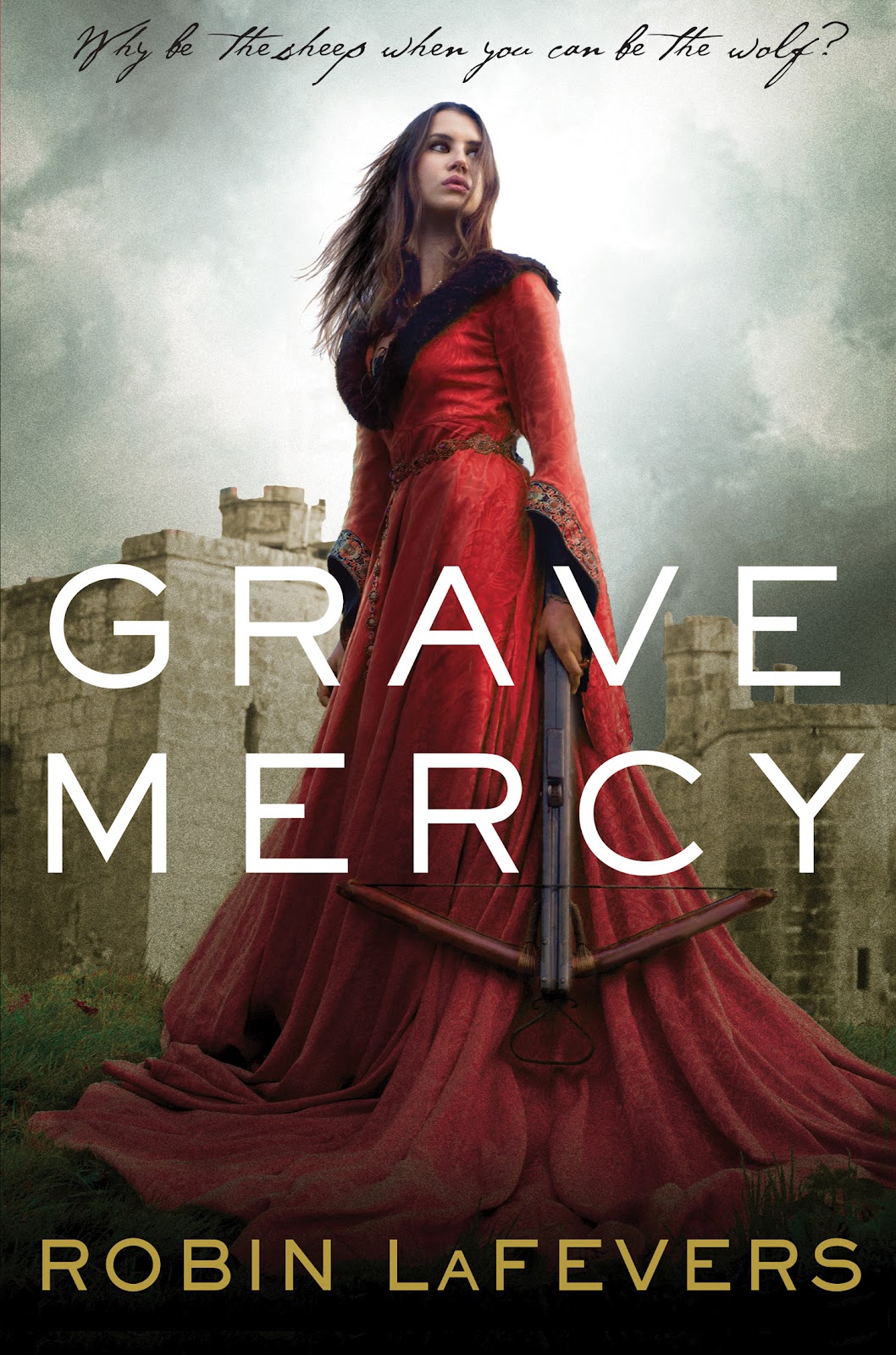
 Birthmarked– In the future, in a world baked dry by the harsh sun, there are those who live inside the walled Enclave and those, like sixteen-year-old Gaia Stone, who live outside. Following in her mother’s footsteps Gaia has become a midwife, delivering babies in the world outside the wall and handing a quota over to be “advanced” into the privileged society of the Enclave. Gaia has always believed this is her duty, until the night her mother and father are arrested by the very people they so loyally serve. Now Gaia is forced to question everything she has been taught, but her choice is simple: enter the world of the Enclave to rescue her parents, or die trying. A stunning adventure brought to life by a memorable heroine, this dystopian debut will have readers racing all the way to the dramatic finish.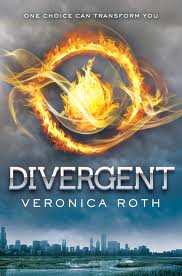


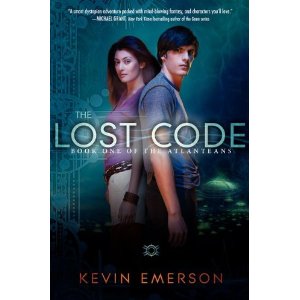
But global climate change is not something new in the Earth’s history. No one will know this better than less-than-ordinary Owen Parker, who is about to discover that he is the descendant of a highly advanced ancient race–a race that took their technology too far and almost destroyed the Earth in the process. Now it is Owen’s turn to make right in his world what went wrong thousands of years ago. If Owen can unlock the lost code in his very genes, he may rediscover the forgotten knowledge of his ancestry . . . and that “less-than-ordinary” can evolve into “extraordinary.” Kevin Emerson’s thrilling novel is Book One of the Atlanteans series–perilous adventures in a grimly plausible dystopian future, fueled by high-stakes action, budding romance, and a provoc-ative question: What would you do if you had the power to save humanity from its own self-destruction?
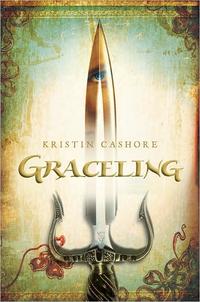
In a world where people born with an extreme skill – called a Grace – are feared and exploited, Katsa carries the burden of the skill even she despises: the Grace of killing. She lives under the command of her uncle Randa, King of the Middluns, and is expected to execute his dirty work, punishing and torturing anyone who displeases him. When she first meets Prince Po, who is Graces with combat skills, Katsa has no hint of how her life is about to change. She never expects to become Po’s friend. She never expects to learn a new truth about her own Grace – or about a terrible secret that lies hidden far away…a secret that could destroy all seven kingdoms with words alone

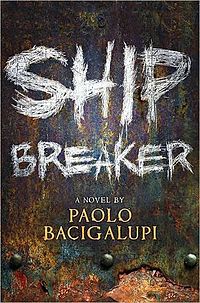 Ship Breaker– In America’s Gulf Coast region, where grounded oil tankers are being broken down for parts, Nailer, a teenage boy, works the light crew, scavenging for copper wiring just to make quota–and hopefully live to see another day. But when, by luck or chance, he discovers an exquisite clipper ship beached during a recent hurricane, Nailer faces the most important decision of his life: Strip the ship for all it’s worth or rescue its lone survivor, a beautiful and wealthy girl who could lead him to a better life… In this powerful novel, award-winning author Paolo Bacigalupi delivers a thrilling, fast-paced adventure set in a vivid and raw, uncertain future.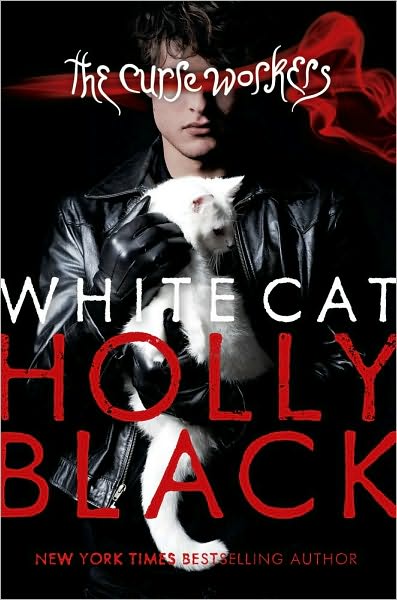
Final Course Reflection
Obstacles to E-book Integration in School Libraries
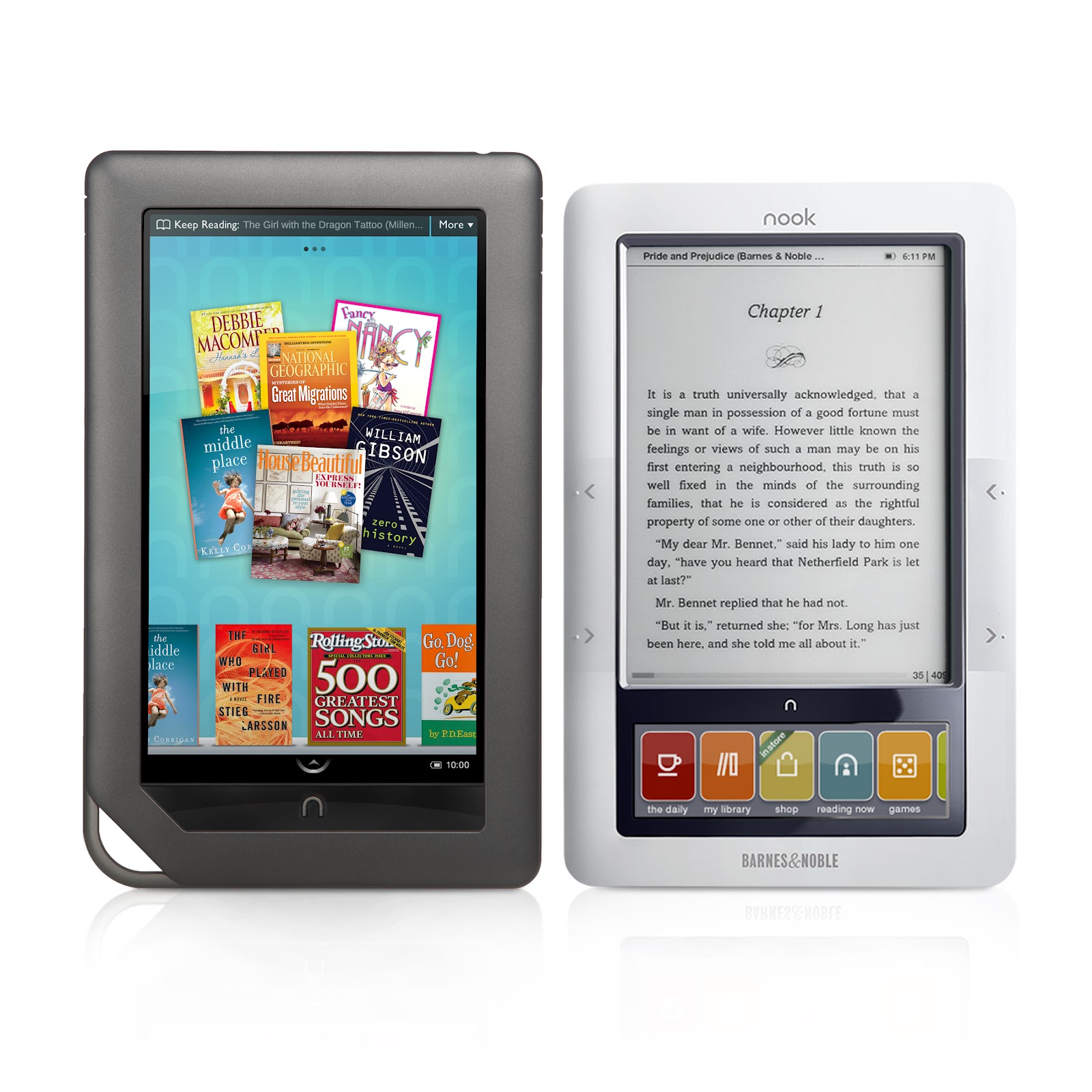 |
| NOOKcolor/ NOOK side-by-side |
One obstacle that stands in the way of placing e-books in the hands of readers is the availability of digital reading devices. In fact, 67% of librarians surveyed by School Library Journal, report that this is the biggest obstacle even over the cost of the e-books themselves (“Things are Changing. Fast,” 2011, p. 28). A plethora of reading devices exist in the market: Nook, Kindle, Sony, iPad, and numerous other devices. Purchasing these devices can quickly deplete an already shrinking budget with prices ranging from $99-$600. Linda Ashcroft (2011) suggests that librarians can learn from e-book suppliers and features such as “Open eBooks” that allows nearly any e-reader or software that can display EPUB and PDF files to display the text (p. 44). Distributors such as Follett now provide e-books that are compatible with multiple devices and smart phones (Android, Apple, Nook, Kindle) and that can be accessed online. Although libraries may not be able to circulate the devices themselves, publishers have taken a significant step towards improving accessibility of e-books by increasing compatibility to allow readers to use their own devices. This advent to the e-book market will allow more school libraries and districts to invest in e-books themselves rather than shying away from venture. Personal device compatibility will be the key to successful school library integration.
In addition to devices, librarians also reported digital rights management and competing platforms to be a concern (“Things are Changing. Fast,” 2011, p. 28). With their e-book collections scattered among multiple platforms and questions of digital rights causing publishers to limit accessibility, librarians feel overwhelmed with the amount of hoops they have to jump through to put e-books in students’ hands. Sixty-nine percent of respondents, according to Ashcroft (2011), report that the limitations for content usage is a significant or very significant hindrance (p. 401). Digital rights management issues muddy the waters for many school librarians to the extent that the time and energy trying to understand the varying issues and perspectives outweights the possible benefits of integrating electronic books into their collections.
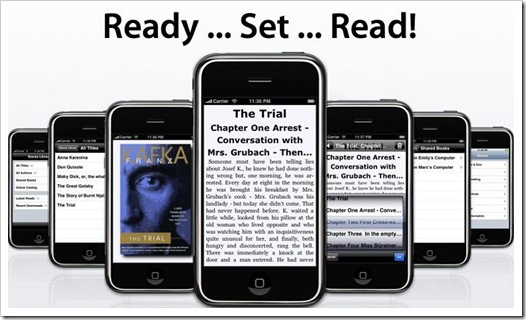 |
| E-books accessed through personal devices such as smart phones |
In contrast to SLJ’s survey, Ashcroft (2011) finds that the biggest limitation librarians report for e-book usage is reader awareness. When respondents were asked why they didn’t use the e-book collection, the highest response was “I do not know where to find e-books” (p. 399) What was more concerning to Ashcroft was the librarian’s lack of awareness of readers’ needs, “users need to know that their library provides ebooks, then how to find them” (p. 399). To overcome this obstacle librarians can again learn lessons from publishers who are offering events such as OverDrive’s Digital Bookmobile that goes into communities to raise awareness (Ashcroft, 2011, p. 405). A school librarian can take advantage of social networks such as Facebook and Twitter to publicize e-book holdings, create video tutorials for accessing e-books using VoiceThread or host online chats to answer questions and book-talk specific titles in the e-book collections. The more tools librarians utilize to reach student readers, awareness will grow and readers will seek out this special part of the school’s collection.
Despite the rapidly evolving world of e-book technology, librarians continue to demonstrate their enthusiasm for the future of their collections. In fact, in five years, librarians projected that “ebook penetration to increase 14-fold by 2016, to 7.8 percent” (“Things are Changing. Fast,” 2011, p. 28). In order to get there, libraries will need to re-focus multiple resources to support e-book acquisition and usage. Budgets, professional development, and initiatives will need reconsideration in order to provide funds, skills, and awareness. For now, a keen awareness of what is available from vendors and publishers and a healthy “wait and see” attitude might be the best course of action while the many issues surrounding e-book integration continue to be refined. Knowing when to act and when to wait will enable the school librarian to wisely and cautiously integrate the service into the school’s collection.
In Response to "Adventures with Cell Phones"
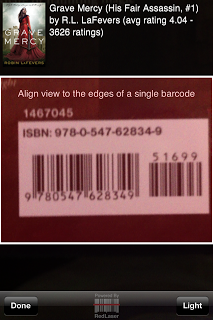 Another use of cell phones in a library includes using social media apps for readers such as Goodreads (http://goodreads.com). The Goodreads mobile app has a feature that allows readers to scan a book’s barcode and automatically add it to a shelf. During one ten minute trip to the library, a student could virtually stock his or her “to be read” shelf for months or add books they have read to their shelf for friends to peruse. Goodreads also provides a place to explore lists, write and read reviews, and connect with authors.
 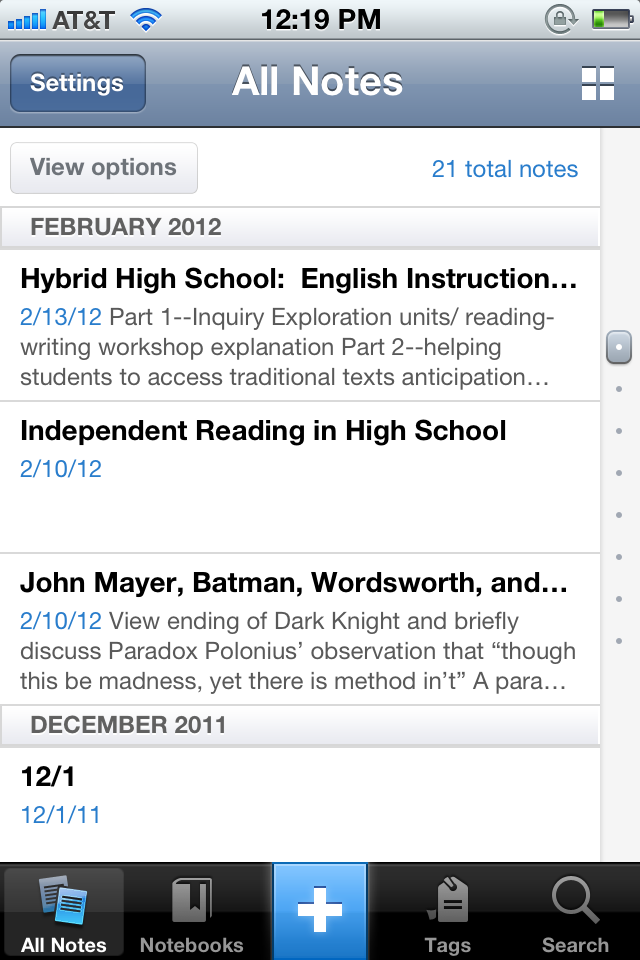 Phones can also be used as personal storage devices with apps like Evernote. As students research, they can take pictures of text, write notes, and email themselves documents to be collected in a “notebook.” They can even share notebooks with collaborators. Evernote is also accessible through the website (www.evernote.com) where students can download content to evaluate, synthesize, and publish their findings.
 Kolb, L. (2011). Adventures with cell phones. Educational Leadership, 68(5), 39-43. Retrieved from http://libproxy.library.unt.edu:2103/login.aspx?direct=true&db=tfh&AN=58108037&site=ehost-live&scope=site
In Response to "Gender, Technology, and Libraries"
Lamont, M. (2009). Gender, Technology, and Libraries. Information Technology & Libraries, 28(3), 137-142. doi: 1837038311.
Smaldino, S.E., Lowther, D.L., Russell, J.D. (2012). Instructional Technology and Media for Learning. 10th ed. Boston, MA: Pearson.
- ← Previous
- 1
- …
- 11
- 12
 (Re)Inventing the Librarian