School-Wide Wednesday: Found Poetry
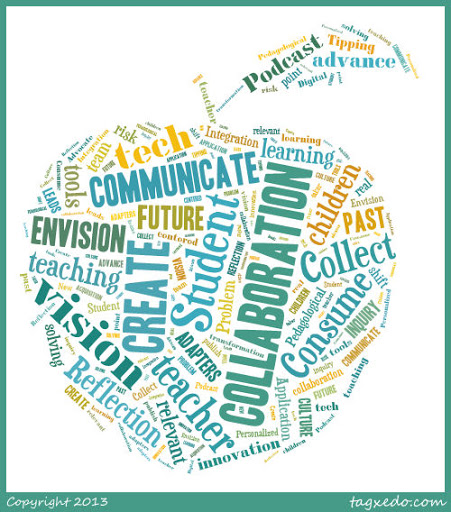 |
| Tagxedo Word Cloud of My Found Poem |
Today, for a special School-wide Wednesday post, I’d like to share a poem I wrote inspired by Jen over at www.empathicteacher.wordpress.com. Last week, Jen shared a strategy she used in her class involving old issues of Upfront magazine, a nonfiction serial publication for teens spanning relevant news, issues, and current events and topics of interest to teens. Her goal wasn’t for students to think about the main idea and supporting details and then write a five sentence summary of an informational article. Her goal was for students to play with language and create a response to the test in the form of a poem.
Found poems are deceptively simple: they require that the reader glean words, phrases, and sentences from a text or multiple texts in order to compose a poem using the author’s language. In my experience, using found poems in response to literature, they allow students to let down their guard and throw away inhibitions about writing poetry. Found poetry also allows students to gather and collect details that “stick with them” without having to worry about why. 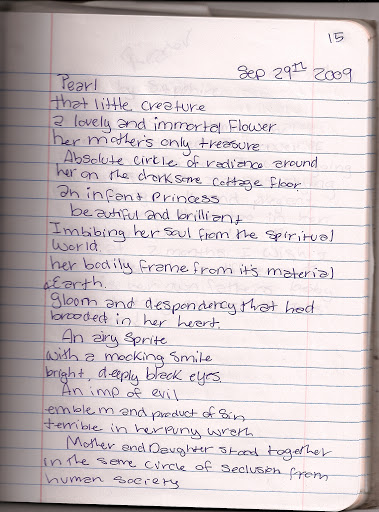 One of my favorite uses of the found poem in an English classroom is in response to difficult texts such as Nathaniel Hawthorne’s The Scarlet Letter. After reading an excerpt from “Pearl,” I invited students to highlight adjectives and phrases that Hawthorne uses to describe Hester’s strange daughter. Then, they went back to the text to glean the language that they felt was most important to create a poem using Hawthorne’s own words to represent Pearl.
We shared our poems, talked about the patterns and dug deeper into the “so what” or “why” in regards to the author’s purpose and style. Then, we moved into a formal analytical response. Since we took the time to play with language and form creative responses, students were ready to think analytically.
Levels of comprehension with found poetry:
1) Literal –What’s the gist?”
2) Interpretation– So what does this mean?
3) Application–Now what do I understand about the author’s purpose or craft?
In content areas other than English, found poems are a quick, accessible tool to engage students in thinking about themes and topics found in expository and informational texts. I decided to take an emerging text form, tweets, to create a found poem in response to last week’s Digital Learning Day #DLDay and the plethora of information I received at TCEA in Austin.
Here was my process:
Step 1–Read my tweets and notes that I took on Digital Learning Day and during the conference.
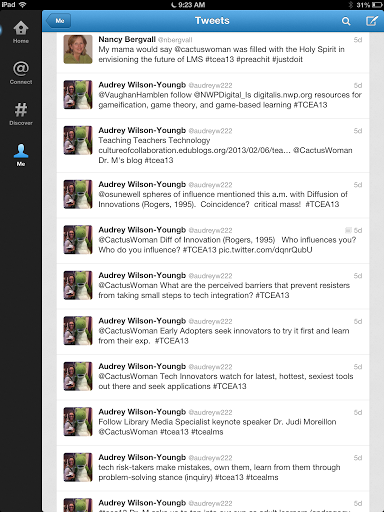

Step 3–Draft a poem by rearranging phrases, creating repetitions, thinking about form, etc.
Step 4–Publish poem:
Infographics: Going Digital with Data
Tech Tuesday: Students as Information Consumers and Creators
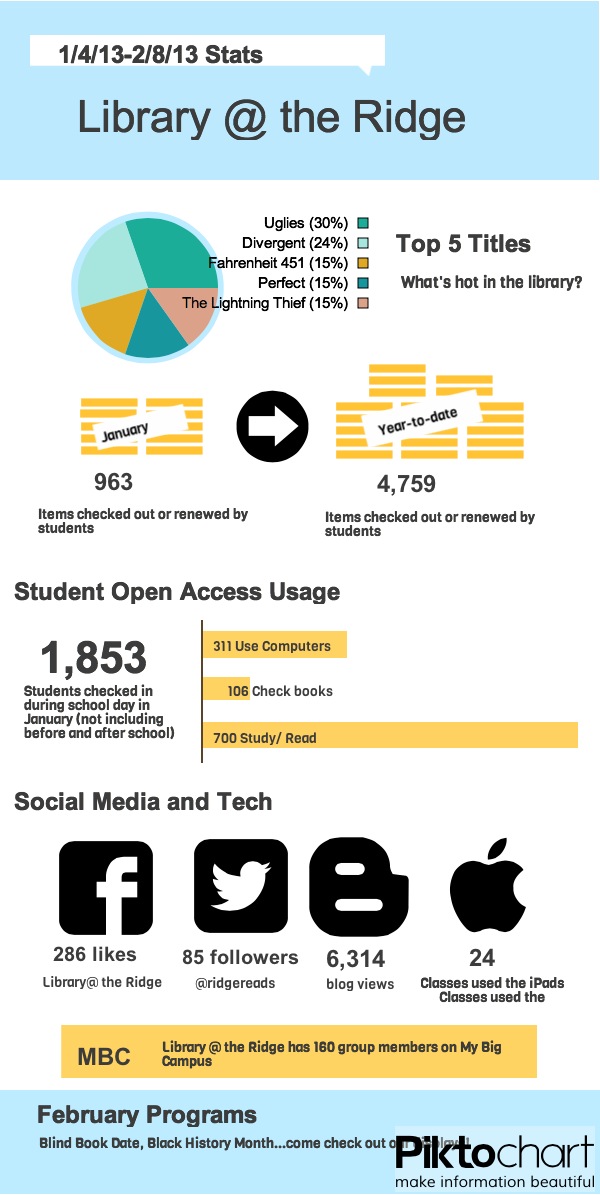
Our students are bombarded with information 24/7/365. They forget (never learned) how to be curious and critical consumers. An inquiry stance to learning taps into our natural curiosities, building upon content area knowledge in relevant and authentic ways. A simple infographic (informational graphic) might make more of a lasting impression upon a student and his learning experience than a five page research paper or report.
 |
| Created at http://www.piktochart.com to publish the library’s statistics for January |
American Association of School Librarians (AASL) NETS-S
It’s Monday! What are you reading? 2/11/13
It’s Monday! What are you Reading? is a meme hosted by Sheila at Book Journeys. It is a great way to recap what you read and/or reviewed the previous week and to plan out your reading and reviews for the upcoming week. It’s also a great chance to see what others are reading right now…who knows, you might discover that next “must read” book!
Be sure to stop by Teach Mentor Texts for a list of participating bloggers and even more great reading ideas from Jen and Kellee.
Read more: http://www.teachmentortexts.com/#ixzz2KcK6RDGH
Books I read:
Amazon speedily delivered the following award-winners for 2012 to my home for my son and I to enjoy together:
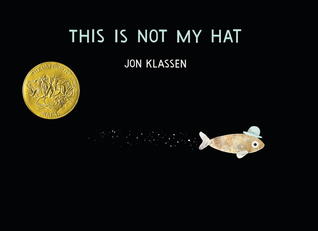
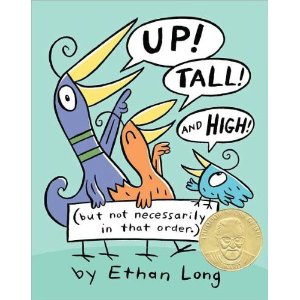
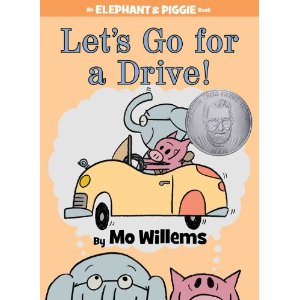
Austin’s lovely, reaching live oaks provided a peaceful and tranquil canopy as I enjoyed the new memoir, Just Keep Breathing by Joan Scott Curtis. I’m glad I bought two extra copies, because this is a pass-it-on read.
Books I’m reading:
Shatter Me by Tahereh Mafi (audiobook from Audible.com)…there are moments listening to this book when I am in awe at the author’s style and use of language. I don’t know if this will be an audiobook purchase for the library, however. The text employs strikeouts to convey narrator’s thought process, which is relayed through an annoying pen scratch sound in the audiobook. And, the narrator sounds too young and girl-y for my interpretation of Juliet. The story is fascinating; think Rogue from X-Men meets Juliet Capulet. 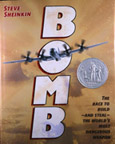 Bomb: The Race to Build–And Steal–The world’s Most Dangerous Weapon by Steve Sheinkin (audiobook from Audible.com). I’m really enjoying the vocal talents of this narrator as he captures the international personas of scientists who sought to steal from one another to be the first to create the atom bomb. There are numerous threads that run through this spy-espionage-historical-nonfiction thriller. Some readers might prefer the print version so that they can re-visit passages. The audiobook is working well for me especially with all of the European and Eastern European names that I would have no clue how to pronounce for myself.
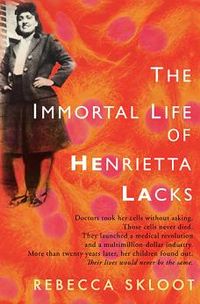
The Immortal Life of Henrietta Lacks by Rebecca Skloot…ahhhh, HeLa. I’m still making my way through this fascinating read. Nonfiction is most definitely my book gap for a reason. My fluency slows down and my stamina while reading it. Whereas I am perfectly content to read an entire novel in the course of a lazy afternoon, my mind just doesn’t want to commit to long reading bursts of nonfiction, no matter how interesting the subject or eloquent the writing.
Books to read:
 Anna Dressed in Blood by Kendare Blake still scares me. I think I’m still recovering Libba Bray’s The Diviners, but I have promised a pair of my most loyal patrons that I will read it! (But only in daylight.)
In Darkness by Nick Lake (Printz Award winner next up in my Audible queue). I’m not exactly thrilled about this one. I’ve been admiring the cover all year, but the synopsis just hasn’t compelled me. I think I’ll spend a little quiet time with this one today at the circulation desk once lunchtime madness winds down.
Pandemonium by Lauren Oliver…is still sitting on my nightstand, winking at me. This week I learned that the first installment Delirium has been optioned for a Fox television series with Emma Roberts!
What are your reading plans for this week?
The "True" Wave of Digital Natives
Today in a session with Project Tomorrow’s CEO, Julie Evans, we were treated with a sneak peak at some of the data trends from the last Speak Up survey administered this past December (2012).

Now, data and I have had a rocky, tumultuous relationship. In my early teaching years, data and I weren’t too familiar with one another–passing ships in the night. As a graduate student, I started to flirt with data a little bit once I caught a glimpse of what he could do for me and some of the practices I was researching in my classroom. But, we hit a major roadblock in our relationship the year that data was wielded like a thick, leather belt, snapping and cracking down the hallway, forcing data-driven instruction down our throats, angrily pushing us towards practices that did not align with our beliefs and better intuition. Data and I broke up that year, and I admit I talked trash about data behind his back.
There was no magic moment when data came back into my life and the past was erased. It took a lot of coaching and mentoring from leaders, friends, and mentors who had healthy, constructive relationships with data. Today, we’re cohabitants of the same house, focused on the improvement of learning for everyone on our campus; we relate easily, flexibly, and without judgment.
So, today when Julie announced she was giving us a preview of the yet-to-be released data, my nerdy heart skipped a beat. Our campus participated in the Speak Up survey–a difficult task in a campus of 2200 students. Individual campus and district results will be made available tomorrow, 2/6. I appreciate having the national trends to compare our local results to and anticipate that we’ll fall in line with those trends.
Three Key Trends for Educational Technology
1) Students want devices that allow them to personalize the educational process, the same way that they personalize their social media and web presence. They want devices that help them be more productive and allow them to CREATE and ADAPT.
2) We’re at a BYOD/BYOT tipping point. The stage is set for integrating personal devices into learning. Administration has turned a corner with its willingness to allow personal devices, teachers are curious, and students are willing and able. How can we take advantage of the growing momentum and be thoughtful, reflective and strategic in our visions and action plans?
3) The “true” digital natives haven’t even arrived yet on our high school campuses. According to the findings of Speak Up’s yearly survey assessing the rolling of technology in learning, a shift has occurred in the readiness, access, and skills our 9-12th graders bring to the digital table and their middle school counterparts. They are coming to us very soon; how will we prepare for tomorrow’s learners?
Wow! I’m excited. I’m ready. I’m curious.
Now what?
by
What are you reading (listening to) Monday? 2/4/2013
You know how the saying goes, “the best laid plans…” and all of that. Last week I had a wonderful reading plan, and then something monumental happened; I discovered that the Season Pass for Downton Abbey allows you to download the remaining episodes for season 3. Whoops. Needless to say my TBR pile only grew this past week, especially following the YMA announcements. 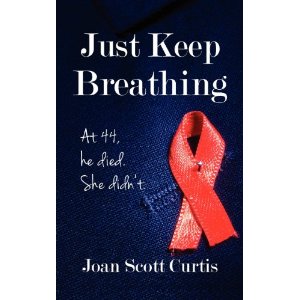 Here’s where I get really excited! A dear friend and colleague published her first book for adults this past week and I have a copy tucked away in my bag to read in the hotel while away at a conference this week. Just Keep Breathing by Joan Curtis is a memoir chronicling Joan’s life following the death of her husband Dennis. Knowing the background of this book and witnessing her journey writing the book over the past seven years that I’ve known her, I believe that it will be one of the greatest reading experiences of my life. I don’t say that lightly. Even though I never knew Dennis, anyone who knows Joan and hears her talk or reads her writing feels like they know Dennis; her love for him is that powerful.
Be sure to visit Teach Mentor Texts for a list of participating bloggers for #IMWAYR!
Student Collaboration with Google Drive
1) One person does all the work. The high-achiever of the group grins and bears it as they carry the weight of the project.
From the other side of our various devices and locations strewn across the metroplex, we all shared a collective sigh and appreciation for the power of collaborative writing and tools such as Google Drive that breathe life and spirit in to the writing process.
So here’s the skinny on Google Drive:
1) It’s free. Doesn’t get any better than that.

Applications for learning:
Can we still have the same learning goals for students and their writing if they are participating in a collaborative essay or project that we would an individual assignment? YES! Do we address more learning goals by having them use technology to work collaboratively on a writing task? YES!
ISTE’s NETs for Students even address this skill as relevant and integral to today’s workforce and post-secondary environments:
| 2. | Communication and Collaboration | ||||||||
| Students use digital media and environments to communicate and work collaboratively, including at a distance, to support individual learning and contribute to the learning of others. Students: | |||||||||
|
Coming soon! My Big Campus allows you to integrate Google Drive as an application, much like it does Facebook and Twitter, which means that students can collaborate on Google Docs and more through one portal: MBC!
What is your personal experience with using Google Drive? Do you see any advantages for using it with students? Are there pitfalls or obstacles to integrating Google Drive into your learning activities?
It’s Monday! What are you reading? 1/28/13
Wow, I’m so anxious right now I can hardly stand it! I’m furiously hitting the refersh button on my browser, waiting for the ALA Youth Media Awards to start so I can grumble and hooray at the list of honor recipients and award winners. So, to pass the time, I figured let’s go ahead and blog about our reading plans for the week (in third person I told myself this).
Books I finished:
This Dark Endeavor by Kenneth Oppel–Fun, sci-fi read sprinkled with philosphical inquiries into the interplay between faith and science. I enjoyed Oppel’s attempt at providing some backstory for Victor Frankenstein as to a possible explanation for his obsession with harnessing the power to create life (which I won’t give away here…but I’m not sure if Mary Shelley would entirely agree with this new age take on her protagonist when most critics seem to agree that the mad scientist is modeled after her inner psyche’s turmoil as a result of the multiple tragedies she faced as a young woman). But, nonethless, a satisfying read complete with a fiery heroine in Elizabeth, Victor’s adopted sister and eventual bride in the original tale. 3 1/2 out of 5 stars for imagination, creativity, and memorable secondary characters.
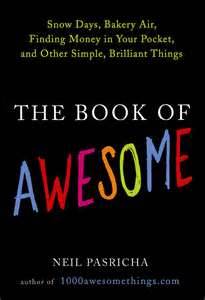 The Book of Awesome by Neil Pasricha–Here was a last minute addition to my stack for this week. This book was all the rave at the TCTELA conference last weekend in Dallas. Thanks to my Amazon Prime membership, it promptly arrived on Tuesday, just in time to be included in a lesson on expository writing with some students on Wednesday. The book is an extension of teh blog 1000awesomethings.com. The author writes short reflective entries about things that are awesome (pushing the button on the elevator and it opening right away, finding a few remaining fries at the bottom of your take-out bag, high-fiving babies, sticking your hand out the car window while driving down the freeway, making a rollercoaster motion….AWESOME!) After reading this book, you can’t help but join in the meme of recounting the most trivial parts of your day as deep thoughts of awesomeness. 5 out of 5 stars for originality, breadth, and depth.
Wonder by R.J. Palacio–(Sigh) (extra long sigh thinking about this lovely story NOT receiving mention in 36 minutes and 18 seconds during the ALA awards…keeping the faith that it will). What can I possibly say about Wonder that hasn’t been said before? Not much, so instead, I’ll let R.J. provide us with a glimpse into the heart of kindness with one of my favorite excerpts:
“If every person in this room made it a rule that wherever you are, whenever you can, you wil try to act a little kinder than is necessary – the world really would be a better place. And if you do this, if you act just a little kinder than is necessary, someone else, somewhere, someday, may recognize in you, in every single one of you, the face of God.”
I’m tearing up all over again just thinking about it!
If you haven’t read it, put every other book on hold for this week and get it, NOW!
Jepp, Who Defied the Stars by Katherine Marsh–I know it took me a few weeks, and the first half of the book didn’t necessarily leave me compelled to read the whole book in one sitting, but oh my gosh, I loved this book by the end. You know how sometimes you have reading weeks when the books seem to be talking to one another? This was one of those weeks. Between Jepp and Auggie from Wonder and a few other characters I’m just getting to know, the underdogs really had a lot to teach me about life, love, and free-will. Wow, just wow.
So, I had to get serious about my library class this week, which took a bite out of my reading plans, so my next two lists are somewhat repetitive from last weeks.
Books I’m reading this week:
The Immortal Life of Henrietta Lacks by Rebecca Skloot–I don’t want to put this book down. I’m only a few chapters in and already I feel like I’ve known Henrietta my entire life. She’s such a strong, soulful presence in this true account of HeLa cells and their impact on the medical community. We’re toying with the idea of using this as a whole-school read, tying in activities from all the content areas.
The Pull of Gravity by Gae Polisner–I would have finished this short novel during naptime yesterday had the warm weather not inticed me to work on my winter garden and prune the rose bushes. Again, there’s something about the underdog in this one. More on it when I’m finished with it.
Books to read this week:
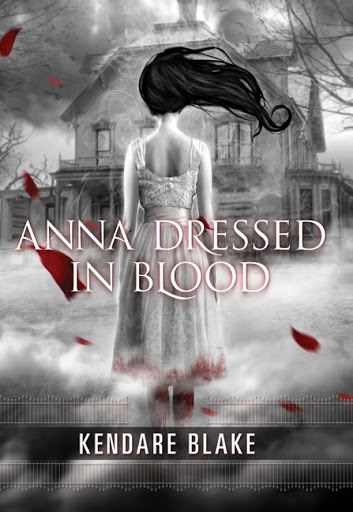
Anna Dressed in Blood by Kendare Blake—After reading The Diviners by Libba Bray this fall I swore off scary books with ghosts for a while (too many night-time reading induced nightmares with jazz music and occult serial killers). But, a library regular insisted that I read Anna because it is “just so good!” She’s fantastic about taking any book I recommend to her, so I figured I’d bite the bullet and hide under my covers for her.
Ball Don’t Lie by Matt de la Pena–here’s my sports pick for this week as an attempt to meet my book gap challenge (and because I’m kind of enamoured by Matt after hearing him speak at TCTELA ❤ ).
Oh, my gosh…only ten minutes to go!
Happy Monday everyone, and happy ALA Youth Media Awards Day! I’m sure next week’s Monday blog post will be full of all the books mentioned this morning that I haven’t read yet….
Trailer Thursday–Books to the Big Screen
The Golden Globes recently aired on television, ushering in the awards’ season for film and t.v. Next month, the Oscar’s will air with all its glamor and glory. In the spirit of the season, I wanted to feature a few books that will be released this spring as feature films! Eeek! There are few greater pleasures as a reader when a book that you love is turned into a movie that you love (and few worse experiences as a reader when a book you love is turned into a movie that you hate…).
It’s Monday! What are you reading? 1/21/13
|
Overall, if was a fairly productive and satisfying reading week. I attended a conference over the weekend, however, that amplified my TBR list to include a healthy selection of nonfiction titles especially. So here’s my report:
Books I Finished:
Graceling by Kristin Cashore. Of course I adored Katsa’s chutzpah, her super-survival abilities, and her yummy un-boyfriend, Po. Since I finished it, I’ve had the nagging desire to change my calico cat’s name to Po. But seeing as how she’s not a boy, and Po probably would turn his nose up at that, I guess we’ll stick to Bebe afterall.
3.5 stars for an overall enjoyable story with some twists and depth of character, especially in the secondary character department (Bitterblue and even Leke), but nothing in her prose pushed me over the top.
The Fault in Our Stars by John Green. You all told me I would love it, and I harbored some doubts half-way through the book, but then there was Amsterdam (sigh). I think it was quite serendipitous, by the way, that I finished the book on its release date anniversary and the same date that John and Hank sold out Carnegie Hall with A Night of Awesome!
A hearty 5 out of 5 stars to one of my favorite “literary” YA books for its splendid treatment of a heart-wrenching subject, awesome characters, and awesome writing….awesome.
Currently Reading:
Jepp Who Defied the Stars by Katherine Marsh. I really am digging this sweet little book. I don’t feel compelled to rush my way through it, and even if I wanted to, I leave it in my special spot at the circulation desk to enjoy during 7th and 8th period after the lunch bunch has left for the day. Like I predicted, Marsh broke my heart, but I’m seeing a new adventure on the horizon and excited to see what is in store next for our little dwarf.
(Anyone else notice a pattern from last week…stars, fate, destiny…last week’s stack inspired me to start working on a review of “stars” books…so stay tuned!)
This Dark Endeavor by Kenneth Oppel. This guy is a prime example of my tendency to withhold certain books as reward since a friend “loaned” it to me over a year ago, and I’m just now reading it. The sequel, Such Wicked Intent came out this past August, so I figured it was time I got serious about this one. A pre-quel to Mary Shelley’s Frankenstein, what literature-loving-English-teacher-turned-librarian could pass this up! Speaking of chutzpah, Oppel’s reimagined Elizabeth has loads; I love her little asides about women’s lib, an homage to the original author’s activist mother I’m assuming. The quest narrative allows our imaginations to run wild as we see the seeds of obsession planted in young Victor’s mind….okay, I better finish this post so I can see what happens next!
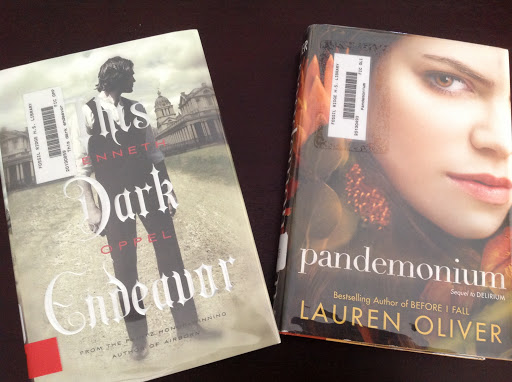
Pandemonium by Lauren Oliver. Oliver’s first book in this series, Delirium, did take me some getting in to before I was invested. I felt there was a surplus of exposition in the first installment–a criticism I usually reserve for the sophomore in a series. Much like Ally Condie’s Matched and Veronica Roth’s Insurgent, this series takes us to a dystopian future where society has re-organized itself around the eradication of the root of all evil, only this time the culprit is Love. Deliria Nervosa, as it the illness is known, is “cured” by an invasive procedure to the frontal lobe when a person turns sixteen. After gut-wrenching revelation and a heart-breaking decision at the finale of Delirium, Lena’s complexity is said to really develop once she finds herself alone at the start of the second book. I’m early in, but already I see potential for some serious evolution in character.
To Read:
My sources tell me that ALA will release their coveted book award honorees and winners lists soon! You know what that means–just like the pre-Oscar countdown, it’s time to read (or re-read) some of the hottest contenders:
Wonder by R.J. Palacio
The One and Only Ivan by Katherine Applegate

And to keep in touch with my YA base, how about Gae Polisner’s Pull of Gravity.
…And to work on my book gap challenge, let’s throw in some nonfiction with The Immortal Life of Henrietta Lacks by Rebecca Skloot.
On the Path to Technology Integration…We Need a Map
Great things are happening here at The Ridge! I’ve always believed that the leadership, innovation, and vision of individuals on this campus have the potential to make us leaders in education, especially in regards to raising student engagement and closing the achievement gap.
Recently, Fossil Ridge was awarded a KISD Education Foundation Grant. The project titled, “Closing the Gap” was the collaborative brainchild of a handful of these leaders.
The goals of the project are:
- Close the gap in access to technology that exists in our student population, allowing for equity to digital tools and resources and extending the school day to a 24/7 model.
- Investigate the role that technology has on learning.
- Inform the long-range vision for technology integration and strategic plan for our campus.
I am pleased that the community and district leaders recognize the efforts and leadership capacity on our campus and am thankful for the present and future support we will receive as we work towards these goals.
As discussions took place regarding deployment of our project, which involves selecting twenty AVID students to receive Dell tablets and Verizon mi-fi cards for use at home and at school, we all agreed that in order to truly understand how technology impacts learning. We needed to form a leadership team, who would engage in a PLC that explores theory, methods, and tools for educational technology. It’s not enough to simply provide students with access to technology. Even the largest 1:1 programs in schools, without a professional development plan for teachers, will not produce the impact on learning that designers anticipate.
This team will visit schools in the Metroplex who have adopted some kind of technology model (1:1, BYOD, etc.) and observe how their deployment model impacts learning, what type of systems are in place to support student and teacher integration of technology, and measures that can capture the data we need to inform our vision. In addition to field trips, the team will also meet regularly to share resources, explore models, and create lessons that integrate tools. But, it all has to come back to the same point: How does technology impact student engagement and learning?
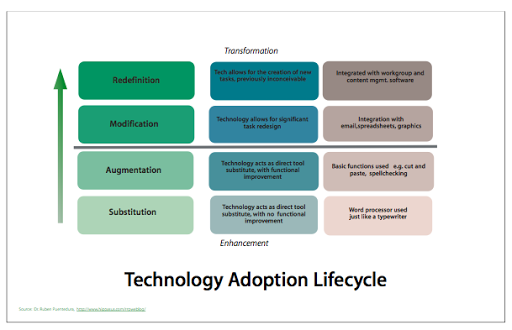
This past weekend I was explaining our project to another National Writing Project teacher consultant who is an instructional leader in a neighboring district that is exploring these same questions and working to support teachers as they grapple with technology that is integrated into instruction. She suggested that we start with the SAMR model developed by Dr Rueben Puentedura. Through this model, Dr. Puentedura demonstrates how our goal when considering a long-range technology adoption cycle on any scale, from district-level down to the classroom, should be to move from enhancement to transformation.

SAMR stands for substitution, augmentation, modification, and redefintion.Substitution: At this stage you are using technology as a direct substitution for another tool. Think using a word processor in lieu of a type writer without utilizing functions such as spell check, grammar check, etc. Dr. Puentedura argues that at this level, productivity actually decreases.
Augmentation: If we continue with our example of the word processor, then at this next level we would use its built-in features such as Spell Checker, word count, copy and paste, etc. Productivity or work flow might increase at this level, perhaps students can produce a finished draft more quickly using a word processor, but how has the tool transformed their thinking?
Notice the dotted line between the Augmentation and the next level in the model. This is meant as a target. When considering tools and tasks that integrate technology with learning, our goal should be to be above this line.
Modification: Again, if we consider the word processor as a tool, how could we modify the tool to allow for greater productivity? Rather than printing the file and sharing it, what if we integrated another tool such as email or drop boxes to publish and share? Or, what if we integrated a product or feature of another tool such as a chart from Excel, digital photos of artificats, etc. At this level, Dr. Puentedura claims, student learning begins to transform.
Redefinition: Here’s where my mind really starts to bend…In the redefinition level, technology allows us to do things otherwise impossible to create new products in new ways. Rather than a word processor where one student is authoring a product, what if students utilized Google Docs to collaborate in real time! This would not have been possible before. Students couldn’t work from their own houses from their own devices on a task at the same time. Now, technology allows for this level of collaboration and creation.
 |
| http://msdwc.edublogs.org/files/2010/04/itlog_techlifecycle1.png |
My colleague explained it to me much more simply…instead of old things in new ways, our goal is to shoot for new things in new ways.
I did some reflecting over some of the tools I’ve highlighted in the blog that meet this goal. Below you’ll find a list of tools and links to those blog posts that help us reach the Enhancement level of learning through technology.
Google Earth
My Big Campus
GoAnimate and Sock Puppets
Socrative
Glogster
VoiceThread
Prezi
I’m curious to hear your take-away after thinking about this model and how it applies to your decision making and lesson planning process. Limitations, drawbacks, confusions, applications? Leave your comment!
 (Re)Inventing the Librarian